





GarySpringfieldScammin’
Carding Novice
- Joined
- 07.11.26
- Messages
- 14
- Reaction score
- 0
- Points
- 1
Lesson 4: Chargebacks & Refunds
Part 1 of 2 — continued in the first reply below.
Lesson 4: Chargebacks & Refunds
Introduction
In the previous lesson a $91.92 purchase travelled from a tap or click through authorisation, clearing, and settlement. That feels like the end. It is not.
A payment can be unwound after settlement, weeks or months later, by a refund, a reversal, or a chargeback. They look similar outside and work very differently inside. This lesson continues the same $91.92 purchase after settlement, tracing each unwind path, the six chargeback stages, the five reason-code categories, and the different rights for credit and debit cards. Claims are tagged Verified, Inferred, Hypothetical, or Unknown where that matters. This is general educational information, not legal advice.
Architecture: Three Ways to Unwind a Payment
| Feature | Refund | Reversal | Chargeback |
|---|---|---|---|
| Started by | Merchant | Merchant or issuer | Cardholder, via issuer |
| Timing | After settlement | Before settlement | After settlement |
| Merchant fee | No dispute fee | No dispute fee | Typically $15 to $100 |
| Merchant contest | Merchant decides | Limited | Yes, by representment |
A refund is the cleanest unwind. Verified in outline: the merchant issues it through its acquirer, the network routes it to the issuer, and the issuer credits the cardholder. A reversal voids a duplicate, error, or cancellation before settlement; reversals are Inferred to be the cheapest unwind, because no dispute opens and no fee applies. A chargeback is the adversarial unwind: the cardholder asks the issuer to take the money back, and the merchant fights back through representment, where evidence decides it.
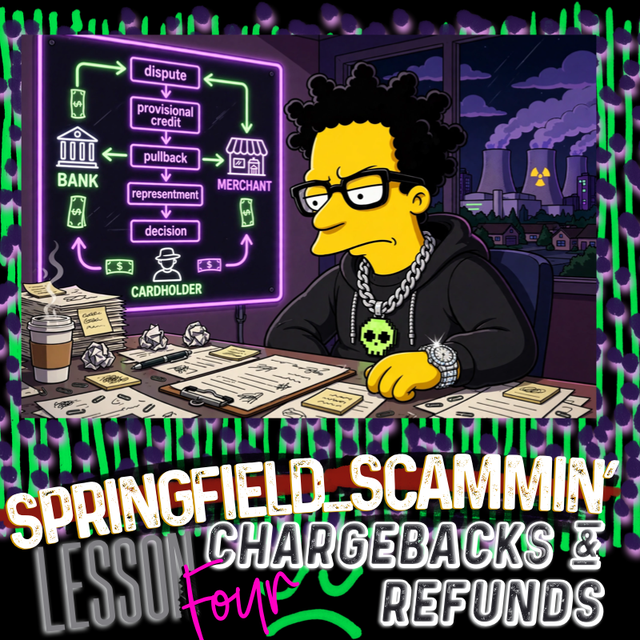
The Six Stages of a Chargeback
- Dispute. The cardholder contacts the issuer with a reason: fraud, goods not received, goods not as described, duplicate charge, cancelled subscription, or credit never received.
- Provisional credit. The issuer usually gives a temporary credit while investigating. It is conditional and can be taken away if the merchant wins.
- Pullback. The issuer sends the chargeback through the network; the acquirer debits the merchant $91.92 plus a fee, typically $15 to $100.
- Representment. The merchant accepts or fights with evidence: delivery proof, signed receipt, photograph, tracking, accepted terms, or proof a refund was issued.
- Decision. The issuer or network reviews the evidence. If the merchant wins, the provisional credit is reversed. If the cardholder wins, it becomes permanent.
- Arbitration. If the merchant disagrees and the amount justifies it, the case can go to network arbitration. The loser pays a fee, so small disputes rarely reach this stage.
No fraud vendor, device fingerprint, or risk score decides the case alone. A chargeback is decided on the reason code and the evidence each side produces. That is Verified in the network rules for representment: evidence wins, not reputation.
Trust Boundary: Who Decides, and What Do They Trust?
First, the issuer trusts the cardholder account enough to open the case and issue a provisional credit, without verifying the claim first. That is by design: a system demanding proof before opening a case would leave genuine fraud victims waiting while a thief spent their money.
Second, the network trusts the reason code. It is not a free-text complaint, but a category with a defined meaning, burden of proof, and evidence that can defeat it. The wrong reason code can lose a winnable case.
Third, merchant evidence at representment only counts if it matches the reason code. Proof of delivery defeats a not-received claim. It does not defeat a claim that goods were counterfeit, damaged, or not as described.
The chargeback is not a refund with a different name. It is a separate adjudication system, with its own categories, evidence rules, and costs.
Weakness: Who Bears the Loss?
By default, in online card-not-present fraud, the merchant bears the loss. Verified as the default allocation: the merchant loses the merchandise and the sale, keeps the processing fees already paid, and pays a chargeback fee, typically $15 to $100. One $91.92 fraud chargeback can therefore cost the merchant well over $91.92. The issuer bears the loss only after a liability shift, and both shifts are narrow.
- EMV chip in-store. Since the October 2015 shift, a merchant that swipes a chip card instead of dipping it bears counterfeit fraud; one that uses the chip correctly does not. Chip counterfeit-fraud losses fell by roughly 87 percent afterwards, which is Verified in network reporting.
- Successful 3-D Secure online. If an online transaction passes 3-D Secure, liability for fraud reason codes shifts from merchant to issuer, for fraud codes only.
What does not shift liability? Address Verification Service (AVS) and the card security code (CVV) do not. They are useful signals, but neither moves legal liability. AVS and CVV are evidence, not a liability shift.
The consumer is heavily protected. For credit cards, liability is $0 in practice under network zero-liability policies, with a $50 statutory cap under 15 U.S.C. section 1643. That is Verified. The weakness is structural: a merchant selling digital goods, or goods hard to prove delivered, is disadvantaged in representment, and a false dispute, known as friendly fraud, costs the merchant money even when the merchant wins.
The Five Reason-Code Categories
The category decides what evidence matters.
| Category | Cardholder claims | Helps cardholder | Helps merchant |
|---|---|---|---|
| Fraud: unauthorised | I did not authorise this | Statement; card still held | 3-D Secure proof |
| Goods not received | I paid but received nothing | Order confirmation | Tracking; signed delivery |
| Not as described, defective, counterfeit | Item was wrong or damaged | Photographs of item | Accurate listing |
| Duplicate, wrong amount, cancelled recurring | Charged twice or after cancellation | Both charges; cancellation date | Proof one charge settled |
| Credit not processed | Refund promised, never issued | Written refund promise | Proof refund issued |
Credit vs. Debit: The Same Dispute, Different Rights
| Feature | Credit: Regulation Z / FCBA | Debit: Regulation E |
|---|---|---|
| Rule | FCBA, Regulation Z, 12 CFR 1026.13 | EFTA, Regulation E, 12 CFR 1005.11 |
| Money at risk | Issuer money | Cardholder money, already gone |
| Deadline | Acknowledge in 30 days; resolve in two billing cycles, max 90 days | 10 business days; extend to 45 days only if credited within 10 days |
| Provisional credit | Typically issued; consumer need not pay disputed portion | Required within 10 business days if extended to 45 days |
| Collecting disputed amount | Cannot collect or report it | No equivalent ban |
| Liability, unauthorised use | $0 in practice; $50 cap, 15 U.S.C. section 1643 | $50 within 2 days, up to $500 within 60 days, potentially unlimited after 60 days |
| Final? | No; reversible if merchant wins | No; reversible if merchant wins |
With a credit card, a disputed $91.92 is issuer money while the case runs: the cardholder does not pay it, and the issuer cannot collect or report it. With a debit card, the $91.92 has already left the account, so the cardholder feels the loss at once.
The debit deadlines are therefore the protection. Verified under Regulation E, 12 CFR 1005.11: the bank has 10 business days to investigate, and can extend to 45 days only if it provisionally credits within those 10 days; the outer limit is 90 days for point-of-sale, foreign, or new-account cases. Report within 2 business days and liability is capped at $50; within 60 days, up to $500; after 60 days, potentially unlimited.
The credit deadlines are Verified under the FCBA and Regulation Z, 12 CFR 1026.13: acknowledge within 30 days, resolve within two billing cycles, maximum 90 days, and do not collect or report the disputed amount meanwhile. If the merchant wins, the provisional credit is reversed.
Continued in the first reply below — Part 2 of 2.


