


Advanced Search

FastRunner - best tool for crypto 120+ wallets 200 + networks

loggerb

Seller
Joined
09.12.21
Messages
22
Reaction score
6
Points
13
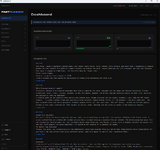
Good time of day. The testing phase is over, the company registration ordeal is behind us, and after fixing bugs and polishing rough edges, we can finally present our product.
1779877299550.png
Stack: Go + Rust + React. PostgreSQL for storage. Runs entirely locally — no cloud, no external requests.


PARSING
1779877359658.png
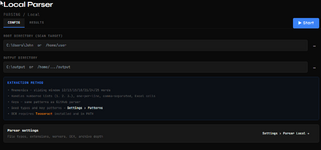
Local Parser — a recursive folder scanner. Finds seed phrases, private keys, addresses, and passwords in any file. Formats: TXT, PDF, DOC/DOCX, XLSX, images (OCR via Tesseract), ZIP/RAR/GZ/TAR (up to 3 nesting levels), SQLite, HTML, JSON, XML, YAML, ENV, source code (JS/TS/PY/GO/PHP/Java/C++ and others), PEM/KEY/PPK/Keystore. Multithreaded, configurable file size limit, exclusions by folder/extension/filename.
1779877386111.png
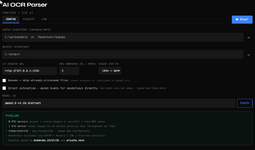
AiOCR — OCR via a local AI model (LM Studio). Screenshots, photos of handwritten phrases, scanned documents — extracts text and runs it through the parser. No data is sent anywhere. Requires decent hardware — small models with 8 GB VRAM are pointless here.


MNEMONICS
1779877408946.png

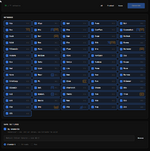
Generation — runs a list of seed phrases through selected networks and derivation paths. Three parallelism modes: Standard / Threads (N threads) / Max (all cores). Saves addresses, private keys, and pairs to separate folders by network. Supports BIP39, Monero, Algorand, TON, Electrum. 71 networks, including Cosmoshub (40+ Cosmos chains in a single run) and Dothub (all of Polkadot/Substrate).
Full network list: Ada, Algo, Apt, Bch, Bnb, Bsv, Btc (Legacy/SegWit/Taproot), Btg, Conflux, Cosmoshub, Dash, Dcr, Dgb, Doge, Dothub, Egld, Eos, Etc, Eth, Evmos, Filecoin, Firo, Flow, Grs, Harmony, Hedera, Helium, Hive, Horizen, Icp, Icx, Iota, Iotex, Kadena, Kaspa, Kmd, Lisk, Ltc, Move, Nano, Near, Nem, Neo, Nervos, Ontology, Pi, Qtum, Rvn, Shimmer, Siacoin, Sol, Starknet, Steem, Stx, Sui, Symbol, Theta, Ton, Tron, Vet, Waves, Wax, Xdc, Xec, Xlm, Xrp, Xtz, Xvg, Zec, Zil.

1779877457601.png
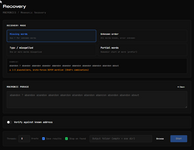
Recovery — restoring damaged phrases. Four modes:
Missing words — replace unknown words with ?, iterates through the entire BIP39 wordlist (2048^n combinations)
Unknown order — all words are known but the order is not — permutation brute-force
Typo — words with typos, search by Levenshtein distance, autocorrection
Partial words — you know the beginning of a word (e.g. aban?) — finds all matches from the wordlist
Result verification by address — specify a known address (BTC/ETH/SOL/TRX) for automatic validation.
1779877609380.png
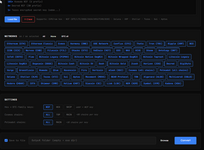
Priv to Address — converts private keys to addresses. Input formats: EVM hex, Raw hex 64, WIF (BTC/LTC/DOGE/DASH/KMD/FIRO/DCR), Solana base58, XRP hex, Stellar seed, Tezos ESK, Sui bech32, Aptos hex. Also accepts mnemonics directly. 57+ networks on output, three BTC-family output modes (WIF/HEX/skip), Cosmos and Polkadot filters.
1779877646114.png
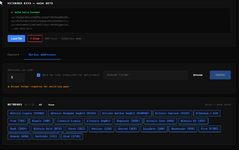
BIP32 — HD derivation along an arbitrary path. Accepts seed or xpub/xprv, derives child keys along any specified path.
1779877665046.png
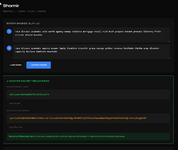
Shamir — splits a secret (seed phrase or key) into N shares using K-of-N scheme and reconstructs from K+ shares.
1779877684426.png
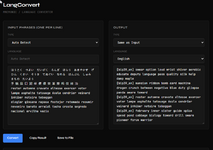
LangConvert — converts mnemonics between 18 BIP39/Monero/Electrum languages. Same entropy, different word representation.
1779877700276.png
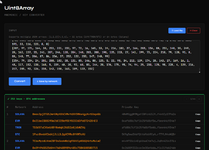
Uint8Array — conversion between byte arrays (JS-style), HEX, Base58, Base64. Useful when data is extracted from browser storage in raw form.


WALLETS
Scans a folder for wallet files, identifies the type of each, and brute-forces passwords. Output — seed phrase, private key, address — saved by network. 122 supported wallet types. Configurable search templates: prefix / suffix / exact / contains — for any folder structure.
Supports: MetaMask, Exodus, Trust Wallet, Phantom, Electrum, Bitcoin Core (wallet.dat), Ethereum Keystore (UTC JSON), Terra Station, KeePass, and dozens of others.


BALANCE

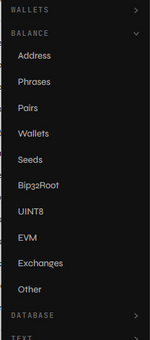
Balance checker for addreses, phrases, wallets, bip32root keys, privatekeys, uint8 array, exchanges, others.

DATABASE

Importer — imports from external files: addresses, seeds, keys, structured exports. Auto-deduplication.
Exporter — export with filters by network, balance, date. Three output formats.
Search — full-text search across all records. By address, key fragment, seed phrase, network.
Stats — database statistics: record count, breakdown by network, session history, timeline.
Antipublic — verification against Antipublic breach databases.
DBSettings — built-in H2 or external PostgreSQL.


TEXT

A toolkit for processing large line-based files — dictionaries, password lists, address databases — as a stream, without loading the entire file into memory.
Sorter — alphabetical, by length, numeric, custom field
Search — keyword, regex, exact, inverted mode
Cleaner — BOM, CRLF→LF, null bytes, whitespace, empty lines
Deduplicator — case-sensitive/insensitive, by first N characters
Converter — encoding and format conversion line by line
Splitter — by line count, size, or delimiter
Merger — file merging: simple, interleaved, with on-the-fly deduplication
Filter — by length, substring, regex, character set, multiple AND/OR rules
Extractor — patterns from lines: addresses, keys, emails, URLs, phone numbers, custom regex
Replacer — string and regex replacement with capture groups, multiple rules in a single pass
Validator — rules by field (login/pass/url/domain): length, email format, presence of digits/special characters, regex. Ready-made presets.
Compare — unique lines in A, unique lines in B, common lines. Optimized for large files.
Antipublic text — file check against Antipublic without loading into the database
Analytics — line count, uniqueness, lengths, character frequency, entropy estimation

UTILITIES

Pass Mutex — password list manager with mutations. 17 mutation types: case (all variants including 2^n brute-force), leet (basic and all combinations), numbers (suffixes, middle insertion), special characters (30+ variants), years with separators, reverse, duplicate, keyboard walks, CamelCase, permutations, separators, padding. Accepts words or a ready-made list, supports login:pass format.
Cleaner — system folder cleanup: removal of malware files, scanning images and documents for embedded data, archive inspection (zip bombs), analysis of hidden and disguised files, script scanning, PE executable analysis.
Hashcat — dedicated Hashcat UI with full configuration: attack mode, hash mode, wordlist, masks, rules, workload, sessions, pre-configured masks for wallets.
Vanity — generates vanity addresses with a specified pattern. BTC (Legacy/SegWit/Native SegWit/Taproot), ETH/EVM, SOL, LTC, TRX, XRP, DOGE. Multithreaded.
Converter — quick format converter: HEX ↔ Base58 ↔ Base64, mnemonic ↔ HEX, WIF ↔ raw key, and more.

PROTECTION
Hardware binding: HWID + login/password. HWID rotates every 10 minutes.

ON THE WEBSITE
Available:
Roadmap — development plan with priorities and statuses.
Wiki — documentation for each module, input data formats, examples. Required reading, or available offline after purchase.
Changelog — full update history with descriptions.
File hashes — SHA256 for every build, so you can verify the integrity of your download.
Licenses — all license types used during development.

ABOUT

FastRunner is an officially registered commercial product. The company is incorporated in the Seychelles with full legal documentation. This is not another anonymous forum script — there is a legal entity behind the tool that is accountable for the product and continues to develop it. Because the product is officially registered, the scope of features is bounded from a legal standpoint — we cannot add things like Lolz API integration, Blockchain.com credential checking, GitHub scraping, auto-withdrawals, or similar functionality. Everything that can realistically be included in the software can be suggested via the form on the website or through support. If it's legally feasible, we will add it.
On privacy: the only user data collected is the HWID for license binding. No telemetry, no analytics requests, no transmission of processed data anywhere, no auto-updates or background downloads. All processing — file parsing, key derivation, password brute-forcing, mnemonic operations — happens exclusively on the user's machine. This is not a marketing claim; it is an architectural property: the software has no external endpoints other than license verification and changelog retrieval. Update checks are manual, triggered by a button.
FastRunner covers all of this in a single installation: parsing any files and formats, recovering damaged phrases, generating addresses across 71 networks, decrypting 122 wallet types, Hashcat integration, full-featured text tools for large database processing, a password mutation generator, vanity address generator, OCR via a local AI model, and a database with search and statistics. All with a proper GUI — no terminal, no Python dependency setup, no environment configuration.
At a comparable price point, nothing on the market comes close in terms of coverage — especially with these privacy guarantees and legal standing.

PRICING AND DISTRIBUTION
One-time payment (Lifetime) or subscription (monthly / 6-month / annual). Updates included for the duration of the license. Subscriptions do not auto-renew.
Source code — available under separate terms, on request.

Plans
Monthly $350
6 Months $1500
Annual $3,000
Lifetime $4,000

Payment: crypto (ETH, BSC, SOL, TRX native).
Wire transfer for companies (B2B).
Universities — one free year upon submission of a form with supporting documents, provided the institution has a relevant information security department.

Escrow via forums is available: you pay the escrow → receive a coupon → download and install → escrow releases payment.
Technical support is provided for the duration of an active license.


Purchase records are stored on the seller's side. If you lose access to your account, contact support with proof of payment and your license will be restored. Your site password is stored only on your end in encrypted form — we recommend enabling 2FA via an authenticator app in settings. Individual buyers need only a login and password. Legal entities must work through B2B (company profile, agreement, invoices, email, contact details).


Website & purchase: pragmacodex.com
News & updates: on the website in the Changelog section or t.me/pragmacodex
Support: in the software under the Support tab, via the ticket system on the website, or
t.me/pragma_support

Support responds within 2–48 hours on business days via the ticket system or Telegram.
Developer & rights holder: PragmaCodex
 
Last edited:

loggerb

Seller
Joined
09.12.21
Messages
22
Reaction score
6
Points
13
Hey everyone! Just a heads-up — the software is going into a major update for a while, and there's a lot of good stuff coming. All purchases, licenses and access to the current version remain completely unaffected and will continue to work as usual. The update covers things many of you have been asking about and waiting for — you can see for yourselves in the screenshots below. During this time I won't be taking feature requests, improvement suggestions or minor tweaks. If you run into a critical bug, feel free to reach out and we'll sort it out. Everything else will have to wait until the new version drops. Thanks for your patience and understanding!
1780012614551.png
1780012624625.png
1780012632811.png
1780012640785.png
 

loggerb

Seller
Joined
09.12.21
Messages
22
Reaction score
6
Points
13
Semi update to v 0.5.87
all updates under spoiler
EVM Checker
- Added full EVM wallet checker supporting 1600+ networks from Chainlist
- Input supports any mix of addresses, private keys, address:key pairs, mnemonics (12/15/18/21/24 words), and passphrases (phrase :: pass format)
- Results grouped by source (address / private key / mnemonic / pair) with expandable network breakdown
- USD balances via CoinGecko — prices prefetched in bulk at check start, cached for the session
- 259 networks mapped to CoinGecko IDs out of the box; extend via coingecko_ids.json next to the executable
- Transaction count per address per network
- Smart address generation from mnemonics runs in background with live progress — no more 5-minute blank screen
- Results show <$0.01 indicator for micro-balances
- Testnet filtering by name (testnet / sepolia / goerli / holesky / ropsten etc.)

EVM — Performance
- Global connection pool with configurable Max connections cap — no more port exhaustion on large runs
- Parallel networks controls how many chains are checked simultaneously
- Per-request timeout cuts dead chains in seconds instead of minutes
- Intra-chain batch concurrency for fast results on large address lists
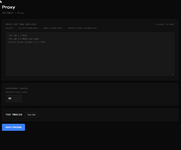
- Proxy pool with round-robin rotation across all proxies
- Without proxies — single-thread mode to avoid bans; with proxies — full multi-thread
- Streaming output to file during check (stream.csv/jsonl/txt) — RAM stays flat even on 200k+ addresses

EVM — Saving Results
Saved to evm_check/ folder:
- addresses.txt — plain addresses
- privkeys.txt — private keys
- pairs.txt — address + key pairs
- evm_pairs.txt — only pairs that have balance
- phrases.txt or phrases/phrase_NNN.txt — mnemonics (single file or one file per phrase)
- stream.txt/csv/jsonl — live append during check

EVM — Tokens via Blockscout (optional)
- Toggle "Scan tokens" to fetch ERC-20 / NFT counts via Blockscout explorer API
- Only runs on addresses with detected activity (native balance or transactions) — avoids wasting requests on empty wallets
- Falls back across multiple explorer URLs per chain
- Respects proxy pool and timeout settings

Exchanges
- Added full exchange key checker supporting 27 exchanges:
Binance, Binance US, OKX, Bybit, KuCoin, Gate.io, Bitget, MEXC, BingX, HTX (Huobi), Kraken, Coinbase, Coinex, BitMEX, Blofin, Bitfinex, Poloniex, Deribit, Crypto.com, Gemini, Bitstamp, Bitunix, Pionex, Bitso, CEX.io, Robinhood, Aster
- Input: key secret or key secret passphrase (one per line)
- Shows USD balance per coin for all 27 exchanges (prices via Binance ticker, cached 5 min)
- For Binance: account type, UID, trade/withdraw/deposit flags, permissions, maker/taker fees
- Results are expandable — click a row to see coin breakdown and account details
- Save results to exchange/<id>/ — per-key files, single file, or by status (valid/empty/invalid)
- Proxy pool + retry + request delay — same model as EVM checker
- Without proxies — single-thread; with proxies — configurable threads

Other — API Key Validator
- Added API key checker for 20 services with detailed responses:
OpenAI (models, GPT-4 access), Anthropic, Groq, DeepSeek, OpenRouter (remaining credits), xAI, HuggingFace (username/type), Stability AI (credits), ElevenLabs (tier/chars), GitHub (login/plan), GitLab, Stripe (mode/balance), SendGrid, Telegram (bot name/ID), Discord (bot name/ID), Google Maps API, Etherscan, OpenWeather, IPInfo (requests), DigitalOcean (email)
- Auto-detects service from key format — no manual selection needed
- Save results to other/<service>/ — same format options as Exchanges

Parser — Improvements

KeyHunter (crypto API key and multiline scanner)
- Added 26 exchange groups with regex patterns and keyword anchors:
Binance, OKX, Bybit, KuCoin, Gate.io, Bitget, MEXC, BingX, HTX, Kraken, Coinbase, Deribit, Coinex, Bitfinex, Poloniex, BitMEX, Crypto.com, Pionex, Gemini, Bitstamp, Robinhood, CEX.io, Blofin, BitUnix, Bitso, and generic API key
- Per-field line anchors — each field (key/secret/passphrase) only matches lines containing relevant keywords, cutting false positives dramatically
- File path anchors per group — a group only activates on files whose path contains the configured keywords (e.g. binance group only on files mentioning "binance")
- Quality filters applied to every matched value:
- Shannon entropy threshold (hex / alphanumeric)
- Minimum unique characters
- Top-3 character frequency check (rejects strings dominated by one character)
- Repeating substring pattern detection
- Blocklist of obvious test/placeholder values
- Ignore line anchors (raw mode) — checkbox to bypass all keyword checks; useful for unlabeled log files with raw key-value lines
- Window reduced to 10 lines by default (was 20) — tighter clustering means fewer false positives
- Excluded files now support substring match without extension (e.g. cookies blocks any file with "cookies" in the name)
- Per-group output files in clean format: key secret passphrase (one per line) — easy to paste directly into Balance checker
- All-in-one file keeps full format: group, field values, source file, line, score
- Text extensions expanded to 65+ types: covers code files (jsx, tsx, vue, svelte, cs, dart, swift, scala, groovy), config (tf, hcl, ps1, bat, cmd), crypto-specific (pem, key, crt, sol, move, pine), notebooks (ipynb), Docker/Makefile, and more
- Groups UI redesigned: search bar, enable/disable all, collapsible rows — no more scrolling through a flat list
- Groups show file path anchors and window size at a glance without expanding

Debug & Stability

- Encrypted debug log (crash_data.frd) — captures panics and errors in all modules. Report key is shown in Debug section; send the fastrunner_crash folder + report key to support for analysis
- Crash log (crash.frd) — captures fatal runtime crashes (out of memory, unrecoverable panics) that bypass normal error handling
- Issues feed — live list of network / file / format problems shown in the Debug section, updated in real time during any check
- Activity console — live per-network progress shown during EVM checks (which chain is running, how many hits)
- Fixed: PDF parser memory bomb — malformed PDFs could trigger multi-GB allocations causing instant crash. Now skipped gracefully
- Fixed: archive extraction limits — ZIP/RAR/TAR entries capped at 10 MB to prevent archive bombs
- Fixed: wallet scanner log tail — previously re-read the entire log file on every poll tick, causing RAM growth on large scans
- Fixed: parser emit flood — large scans no longer overload the UI bridge by throttling live result events
- Added runtime memory limit (80% of system RAM) as a general safety net


Text — Terabyte File Support

All Text tools now handle files of any size without RAM limits:
- Sorter — files >2 GB via external merge sort: 512 MB chunks sorted in RAM, then k-way min-heap merge
- Deduplicator — files >2 GB: same chunking + adjacent-key dedup during final merge
- Merger (with dedup) — merging multiple large files without OOM: external sort + dedup merge instead of in-memory map
- Antipublic — combined size >2 GB: sort base + sort main then two-pointer scan O(M+B), base never loaded fully into RAM
- Compare — both files >2 GB: sort A + sort B then two-pointer scan with three output streams (only-A / only-B / both)
- Splitter (by domain) — millions of domains without file handle exhaustion: external sort by domain first, then single-pass write (one file open at a time)
- Extractor (with dedup) — dedup on extraction >2 GB: streaming extract to temp via chunks, then ExtMergeDedup
- Analytics — added caps without external dependencies: domainCount/passCount up to 2M/5M keys, unique logins/passwords/URLs/domains up to 20M each; counters keep growing accurately after cap, UniqsCapped flag in result
- Threshold: 2 GB — files below processed in memory as before (faster), above automatically switch to external merge
- Speed on NVMe: ~400–500 MB/s read + parallel temp file writes via OS page cache; 2.4 TB file ≈ 4800 chunks

Proxy Tester — Improvements
- Background testing — 100k+ proxy lists no longer freeze the UI
- Shows live counters (alive / dead / checked / total) instead of rendering all rows
- Results stream to alive.txt as proxies are confirmed — file is ready even before the test finishes
- "Apply N alive" button — replaces the working proxy list with the survivors in one click

Balance — Exchanges Display
- Key/secret input hint and placeholder now show space-separated format (key secret passphrase) matching the output format from KeyHunter
 

loggerb

Seller
Joined
09.12.21
Messages
22
Reaction score
6
Points
13
We sincerely apologize for the delay in the planned update. Unfortunately, a combination of unexpected circumstances — power-related issues on our end, along with the need to strengthen our software's protection against cracking — have forced us to push back the release date.
For users with a lifetime license, the update is expected within approximately one week. For all other users, the estimated timeframe is 10–12 days.
The balance checkers are fully complete and ready to go. At the moment, our team is focused on final bug fixes and hardening the protection layer to ensure you receive a stable and secure product.
Alongside the update, the FAQ will be fully reworked and will now be available in both English and Russian. Additionally, the site wiki will be updated to reflect everything introduced in the latest version of the software.
We appreciate your patience and understanding. The update is on its way.
 

stayactiveRR

Active Carder
Joined
04.07.26
Messages
35
Reaction score
4
Points
8
Can you offer test and how I set this up ! I'm really interested with the service.
 

loggerb

Seller
Joined
09.12.21
Messages
22
Reaction score
6
Points
13
v0.8.11

BALANCE — INPUT AND OUTPUT FORMATS

WALLETS — Cryptocurrency Wallet Scanner and Decryptor
Wallets is a two-stage tool. The first stage: recursively traverses a folder on disk, searching for cryptocurrency wallet files (browser extensions, desktop wallets), decrypts using passwords from templates, and extracts phrases/keys/addresses. The second stage (WalBalSection): checks balances by addresses from the results of the first stage on 44 networks.
Both stages operate independently—you can run just the scan and check the balance later, or use the output from the previous run. - Mnemonic phrases (BIP39, 12/24 words)
- Hex seeds (128-character hex, 64-character, and other formats)
- XPriv keys (xprv/yprv/zprv)
- Private keys
- Addresses (even if the password is not found, the addresses are still saved)
Wallets with an unfound password are saved in passwords_only.txt, which lists the paths to files for which the password could not be brute-forced. This is important: addresses from such wallets are not lost; they can be checked separately or brute-forced later. Saving options (checkboxes):
- Addresses — save found addresses
- Seeds — save hex seeds
- Private keys — save private keys
- Decrypt data — save full decryption data
OutputSummaryCard — after completion, displays tiles with the number of results found: Phrases / Hex Seeds / XPrivs / Private Keys / Addresses.
Results panel — list of found wallets. Two viewing modes: list and folder tree. Clicking on a wallet opens a detailed panel with tabs:
- Phrases — mnemonic phrases from this wallet
- Keys — private keys and XPrivs
- Addresses — addresses
- Raw — raw decryption data
Networks — select networks to scan. 44 networks are supported: EVM, SOL, BTC, LTC, DOGE, TRX, XRP, TON, NEAR, ATOM, DOT, KSM, ADA, INJ, SEI, OSMO, KAS, TIA, DYDX, CRO, ALGO, XLM, XTZ, SUI, APT, EGLD, HBAR, FIL, FLOW, NEO, VET, ZEC, DCR, DASH, BCH, BSV, DGB, ZIL, TAO, PI, STARK, RUNE, STX, ONT, IOTX.
All / None buttons for quick selection.
Results table:
Columns: Type, Wallet (file name), Addresses (number of addresses), Total USD (total balance).
Clicking on a row opens the wallet's detailed panel:
- Full path to the wallet file
- Password (if found)
- Seeds, private keys, and xprv from this wallet
- Nested table: Chain / Address / USD — only addresses with a balance
- Clicking on an address reveals extended API data (balance, staked, tokens, txs, etc.) and a link to the explorer
- Network errors where the request failed

ADDRESS — balance check for ready-made addresses

Accepts addresses directly, one address per line. All major network formats are supported: EVM (0x...), Tron (T...), Bitcoin (bc1 / 1... / 3...), Cosmos addresses (cosmos1..., osmo1..., inj1...), Solana, XRP, TON, NEAR, and over a hundred other networks.
Input: manually in the field, from a file, or from a folder containing files.
Auto-detection mode — the engine automatically determines which network each address belongs to based on its format, eliminating the need to specify networks manually. Alternatively, you can disable auto-detection and manually select specific networks from the list; then each address will be checked against all selected networks. Supported networks are grouped by category: major (ETH, BTC, SOL, TRX, XRP, TON, ADA, and others), Cosmos (cosmoshub, osmosis, injective, dydx, celestia, and over 80 networks), Polkadot/Substrate (dot, ksm, avail, azero, vara, and others), and others.
Saving: TXT or JSON. Split options: separate file for each address, one shared file, or by network. Saving filter: all results, only non-zero results, or results above a specified threshold in USD.
The results table displays: network, address, status, USD balance, native balance, token count, staking, NFTs, and transactions. Clicking on an address opens a detailed card with all fields returned by the service.

PAIRS — balance check using private keys

Accepts private keys in any format. Keys come in several types:
- WIF / base58 — the classic format for Bitcoin and compatible networks (starts with K, L, 5 for BTC, or similar for LTC, DOGE, BCH, etc.)
- Hex — a raw 32-byte key in hexadecimal notation (64 characters), used in EVM, Tron, NEO, ICON, Filecoin, Stacks, VeChain, EOS, Ontology, IoTeX, Flow, Sui, Aptos, NEAR, TON, MultiversX, Hedera, NEM, XRP, and others.
- Hubs — a special multi-chain scanning mode (Cosmos, Polkadot).
The engine automatically detects the key type, derives addresses for the selected networks from it, and checks the balance for each address.
Input: manual, from a file, or from a folder.
Save: TXT or JSON. Breakdown: by key (one file for each private key with all addresses and balances), one shared file, or by network. Filter: all / only non-zero.
The detailed card displays: the key itself, key type, network, address, status, and extended API data. Buttons for copying the address and key.

PHRASES — balance check using mnemonic phrases

Accepts mnemonic phrases (seed phrases) from 11 to 25 words long in BIP39 (English).
Supported input format:
phrase
phrase :: passphrase
A colon-colon separates the primary phrase from the secondary password (BIP39 passphrase). Phrases with and without a passphrase are processed differently — a single phrase with different passphrases results in different wallets.
Input: manually into the text field, or from a folder with .txt files.
The Depth parameter is the HD wallet's derivation depth. If depth=1, only the first address (index 0) for each network is checked. A higher value checks the first N addresses for each network, which is useful if coins may not have been received at the first address.
All major networks are supported: EVM, BTC, Tron, Solana, XRP, ADA, TON, NEAR, Cosmos chains, Polkadot chains, and others.
Storage: TXT or JSON. Breakdown: by phrase, single file, by network.
Filter: all / only non-zero.
Detailed card: full phrase, network, address, derivation path, private key (if returned), extended data.

BIP32 ROOT — balance check using BIP32 root keys

Accepts BIP32 root private keys, which are the extended root keys of the HD wallet. Formats: xprv, yprv, zprv, tprv (and their equivalents—Xprv, Yprv, Zprv, Tprv, uprv, vprv, etc., depending on the network and address type).
A single BIP32 root key can contain addresses of multiple networks at once—the engine automatically deploys derivation paths for each selected network. Supported networks and derivation paths:
Bitcoin Legacy (P2PKH) m/44'/0'/0'/0, m/44'/0'/0', and others
Bitcoin Wrapped SegWit (P2SH) m/49'/0'/0'/0, m/49'/0'/0', and others
Bitcoin Native SegWit (P2WPKH) m/84'/0'/0'/0, m/84'/0'/0', and others
Bitcoin Taproot (P2TR) m/86'/0'/0'/0, m/86'/0'/0', and others
Ethereum / EVM m/44'/60'/0'/0, m/44'/60'/0', and others
Tron (TRX) m/44'/195'/0'/0, and others
Ripple (XRP) m/44'/144'/0'/0 and others
Litecoin Legacy and SegWit Dogecoin, Bitcoin Cash, BSV, Dash, Zcash, Horizen, Decred, DigiByte, Ravencoin, Firo, Komodo, Qtum
Hovering over a network name in the interface displays a full list of derivation paths used for it.
Save: TXT or JSON. Breakdown: by key, single file, by network. Filter: all, non-zero, or above a threshold in USD.
An additional "Save per key" feature creates one file for each original BIP32 root key after the run is complete. The file name includes the found balance in USD: USD$_[key].txt.

UINT8 — balance check using UINT8 arrays
Accepts private keys in UINT8 array format—this is a byte representation of the key as an array of integers from 0 to 255.
Example format:
[175,184,12,124,241,178,95,104,191,94,107,102,41,241,212,65,158,131,250,155,67,232,88,140,207,244,251,238,68,201,52,231,115,114,69,245,255,152,239,193,218,91,155,41,112,33,213,248,230,91,6,222,118,202,214,172,215,167,37,75,181,19,238,252]
Two supported Size:
32 bytes — secp256k1 key (Ethereum/EVM, Tron, Bitcoin)
64 bytes — ed25519 key (Solana)
This format is used in a number of libraries (web3.js, ethers.js, Solana web3, some hardware wallets and browser extensions) when exporting or storing keys internally.
Bug fixed: Previously, when entering a 32-byte key for the Tron network, the address was generated incorrectly.
Input: manual or from a .txt file.
Supported networks: Ethereum/EVM, Tron (TRX), Bitcoin (BTC), Solana.
Save: TXT or JSON. Split: by address, single file, by network.
Filter: all, non-zero, above the threshold in USD.
The "Save per uint8" function writes one file to each source uint8 array named USD$_[bytes].txt.

EXCHANGES \ OTHERS — Exchanges and several networks
A number of issues in retrieving and displaying balances have been identified and fixed.
Exchanges — Fixed incorrect processing of responses from several exchanges when checking balances via their API. In some cases, non-zero balances were returned as zero or were not processed at all due to changes in the response formats on the service side.
Other networks — Fixed balance inconsistencies for a number of networks, primarily related to non-standard API key denominations.

TEMPLATES — Data detection and extended syntax
Templates now support commas as separators when writing rules; previously, only spaces and line breaks were supported.

WALLET SCANNER — Data collection without a found password
Previously, when working with encrypted wallets, the engine skipped recording if the password was not found. Now, all wallet data—address, type, network, and balance—is recorded. This prevents the loss of addresses with balances that would otherwise require separate password searches.

HASHCAT — Integration Fixed
Bugs in the built-in Hashcat integration have been fixed: incorrect task completion upon interruption, progress bar freezing after the brute-force process is complete, and incorrect status detection in some attack modes.

TEXT
Data display in the TEXT section tools (Cleaner, Replacer, and others) has been fixed. Long text strings would extend beyond the window borders and overlap the interface. Long text is now truncated at the ellipsis and correctly remains in its column.

FAQ in Russian
The built-in help has been completely rewritten in Russian and is now available in CHM format with illustrations. Accessed via the FAQ button in the menu, it no longer requires an external viewer and functions like standard Windows help with section search.

Saving data in non-critical fields
Input fields that do not directly affect the result (filters, notes, user labels, and the like) now retain their last value between sessions. No need to enter the same information every time you launch the app.

Updated to Wails 3
The app's internal framework has been updated to Wails 3. This is primarily noticeable to the user in terms of startup speed and interface responsiveness—it's noticeably faster, especially when switching between sections with large amounts of data.

Server pings are more frequent, without thread monopoly
The app now syncs with the server more frequently to check the license status. Thread usage for background tasks has also been limited: background checks can no longer consume all available cores and slow down the app's main operation.

Stability when processing large amounts of data
Conflicts that caused freezes and crashes during prolonged processing of very large databases (hundreds of gigabytes and above) have been eliminated. The issue was related to internal buffer overflows with certain data patterns. Processing terabyte databases now runs reliably without freezing.

Other minor fixes
Many minor tweaks throughout the app: rare freezes when switching tasks have been eliminated, incorrect button states after completing operations have been corrected, and network error handling has been improved with clear messages instead of technical codes.

Promo codes are temporarily disabled. Discounts using promo codes will only be available on major international holidays—keep an eye out for announcements in the group.

The FAQ can now be downloaded for free directly from the Telegram group without purchasing a license. It contains a full description of all software features—we recommend reading it before purchasing.

License prices have increased:
1 month — $350
6 months — $1,500
1 year — $3,000
Lifetime — $4,000

Lifetime will remain at the old price of $2,000 until September 15, 2026; after that date, the price will increase to $4,000.

For those who want to familiarize themselves with all the features before purchasing, I've attached a full FAQ with images and detailed descriptions of all sections.
https://t.me/pragmacodex/45
 

mrpink

Moderator
Joined
14.10.25
Messages
132
Reaction score
45
Points
28
Attention! To avoid scam, always use the forum's Escrow (or Auto Escrow).
Forum is not responsible for any deals committed without Escrow Service!
 

loggerb

Seller
Joined
09.12.21
Messages
22
Reaction score
6
Points
13
Fixes and improvements:
— Fixed a ZilPay-related bug: interacting with the extension would break the decryptor, preventing it from retrieving the active license session.
— Fixed a stack overflow error caused by infinite recursion when receiving non-standard HTTP responses from servers during balance checks.
— Fixed a memory overflow issue occurring when checking balances for datasets exceeding 2 million phrases.
— Redesigned balance-checking logic (for phrases, pairs, and BIP32): data is now expanded locally before being loaded into the checker. This reduces RAM usage and eliminates junk files in temporary folders.
— Fixed the display of the Mnemonic / PrivToAddr tab: networks and settings are now visible immediately, without waiting for keys to load. Added an autocomplete feature for addresses during manual entry.
— Fixed issues with certain Cosmos networks and removed several non-functional networks.
— Increased the default check timeout from 10 to 120 seconds; addresses with large balances or slow APIs were previously failing to respond within the 10-second window.
— Added backup servers for STX, XVG, and INJ; the original servers were hitting rate limits when processing large volumes of addresses.
— Wallets Scanner now saves results to a folder named in the format `wallet_scanner_date_time`.
— Minor interface improvements: save folder locations are now remembered between sessions.
About wallet data formats (LDB)
Many wallet extensions store data in log/LDB files across two versions:
v1 — deleted (inactive) records. Wallets from this database are no longer active, yet they often contain phrases and private keys in addition to addresses. These may not appear during a standard export. v2 — full database: seed phrases, private keys, standard accounts, hardware wallets, snapshots, and more. If you exported a phrase but do not see the balance, export the extension itself and check the balance inside it.
 

loggerb

Seller
Joined
09.12.21
Messages
22
Reaction score
6
Points
13
v 0.9.0

Balance
DeBank integration without fake balances; requires a large proxy pool (1000+) due to rate limits
Balance EVM overhauled: RPC editor with ability to remove, reorder, and save RPC lists; built-in limits and validation
Phrases, Pairs, Bip32 balance checks redesigned for lower CPU and RAM usage; temp folder no longer cluttered
Wallet balance checker rebuilt: numerous bug fixes, cleaner and more compact interface; TRX fixed
Console output added to Other and Exchanges checkers
I am not hiding the errors in the console—they are supposed to appear that way—but that doesn't mean the address won't be checked; it will check as many times as you specified, automatically rotating proxies.

Wallet Scanner
File detection improved: now recognizes wallets with only 2 matching identifiers instead of requiring more
Scannable targets split into categories: browser extensions, desktop apps, and heavy targets (disabled by default to save time)

Settings
New Settings DeBank section: enter your API key and issue date from Rabby Wallet to enable DeBank checks

Performance
Check speeds increased significantly
Recommended thread counts: up to 50 threads on 100 Mbps, up to 200 on 1 Gbps
When using DeBank, proxy usage is high — stock up; each proxy allows ~10 requests before a 10-minute cooldown

Other
FAQ added in English
An "errors" section has been added to the FAQ to clarify what the errors are.
Subsequent software updates—excluding critical updates and hotfixes—will follow the creation of other WatchEye software.
 

loggerb

Seller
Joined
09.12.21
Messages
22
Reaction score
6
Points
13
Licensing
Improved error messages for license failures — each failure reason is now described precisely: expired license, HWID change, blocked AppData, system clock desync, TLS/antivirus interference, connection timeout, and server unavailability
AppData file empty/locked no license session — license file inaccessible (AppData locked by antivirus or another process)
License expired license expired — please renew your license
HWID changed license connection lost — hardware ID mismatch (contact support)
Clock out of sync license connection lost — system clock is out of sync (check your date/time settings)
Invalid API response (parse/signature) api did not return a valid license response — server may be under maintenance
TLS/antivirus license connection lost — TLS connection failed (antivirus or firewall may be blocking the connection)
Timeout/DNS/disconnect license connection lost — connection timed out
Wallet Scanner
Added maximum performance mode: pressing the button forces the scanner to use up to 80% of CPU resources instead of the default automatic mode
File Map
File map building has been reworked: previously ran single-threaded to avoid disk overload — now runs in parallel with automatic load balancing; scanning speed has increased significantly
Exodus
After successful wallet decryption, addresses are now automatically generated for 15 networks: BTC, ETH, SOL, TRX, DOGE, LTC, ZEC, BCH, SUI, ETC, APTOS, BSV, DOT, DGB, COSMOS
Parsing
Fixed a critical bug in the local PDF parser: corrupted or non-standard document metadata could cause the application to hang or crash with memory usage exceeding 40 GB
Temp Files
The application now automatically removes temporary files from the %temp% folder on startup and shutdown. If leftover files from previous versions remain in the folder after an update — simply open and close the program once, or clean %temp% manually
FAQ / Need Info — Settings guides for all sections
Added detailed settings recommendation pages for all major FAQ sections: Parsing, Mnemonics, Wallet Scanner, Database, Text, Utilities.
Many users were running the tools with default settings and running into common issues: the parser was slow because Workers defaulted to 4 even on 16-core machines; Wallet Scanner missed wallets due to Folder ID mismatches; database imports silently dropped lines; and the deduplication in Text → Cleaner activated unexpectedly. The Database section now specifically covers the Antipublic behaviour when a database is connected — lines already present in the database are marked as public, which frequently caused confusion.
Each section now includes: parameter tables with descriptions and recommended values, warnings about common mistakes, and ready-made workflows for the most frequent tasks.
FAQ / Balance — Balance Network
Added a section describing what data each network collects during a balance check. Checking a wallet is not limited to the native token: many networks issue separate requests for token , NFTs, staking positions, delegations, and other holdings. Some networks perform 5–8 requests per address. The section explains why certain networks take longer and how to account for this when choosing thread counts and proxies.
FAQ / Balance — Balance Settings Guide
Added a section with recommendations for configuring the Balance tools: proxies (formats, rotation, validation), threads (how they relate to proxy count and API rate limits), request speed, wait/backoff behaviour on errors and rate limits, timeouts, and retry logic.
 
Top Bottom