


loggerb
Seller
- Joined
- 09.12.21
- Messages
- 18
- Reaction score
- 5
- Points
- 13
Good time of day. The testing phase is over, the company registration ordeal is behind us, and after fixing bugs and polishing rough edges, we can finally present our product.
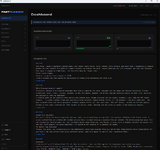 Stack: Go + Rust + React. PostgreSQL for storage. Runs entirely locally — no cloud, no external requests.
PARSING
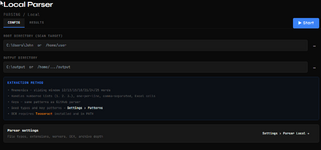 Local Parser — a recursive folder scanner. Finds seed phrases, private keys, addresses, and passwords in any file. Formats: TXT, PDF, DOC/DOCX, XLSX, images (OCR via Tesseract), ZIP/RAR/GZ/TAR (up to 3 nesting levels), SQLite, HTML, JSON, XML, YAML, ENV, source code (JS/TS/PY/GO/PHP/Java/C++ and others), PEM/KEY/PPK/Keystore. Multithreaded, configurable file size limit, exclusions by folder/extension/filename.
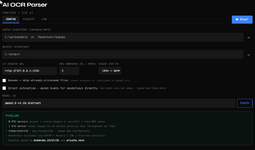 AiOCR — OCR via a local AI model (LM Studio). Screenshots, photos of handwritten phrases, scanned documents — extracts text and runs it through the parser. No data is sent anywhere. Requires decent hardware — small models with 8 GB VRAM are pointless here.
MNEMONICS

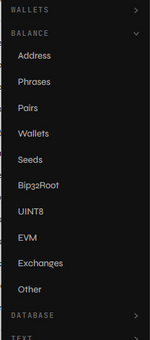
Generation — runs a list of seed phrases through selected networks and derivation paths. Three parallelism modes: Standard / Threads (N threads) / Max (all cores). Saves addresses, private keys, and pairs to separate folders by network. Supports BIP39, Monero, Algorand, TON, Electrum. 71 networks, including Cosmoshub (40+ Cosmos chains in a single run) and Dothub (all of Polkadot/Substrate).
Full network list: Ada, Algo, Apt, Bch, Bnb, Bsv, Btc (Legacy/SegWit/Taproot), Btg, Conflux, Cosmoshub, Dash, Dcr, Dgb, Doge, Dothub, Egld, Eos, Etc, Eth, Evmos, Filecoin, Firo, Flow, Grs, Harmony, Hedera, Helium, Hive, Horizen, Icp, Icx, Iota, Iotex, Kadena, Kaspa, Kmd, Lisk, Ltc, Move, Nano, Near, Nem, Neo, Nervos, Ontology, Pi, Qtum, Rvn, Shimmer, Siacoin, Sol, Starknet, Steem, Stx, Sui, Symbol, Theta, Ton, Tron, Vet, Waves, Wax, Xdc, Xec, Xlm, Xrp, Xtz, Xvg, Zec, Zil.
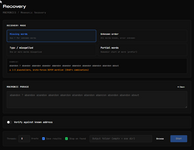 Recovery — restoring damaged phrases. Four modes:
Missing words — replace unknown words with ?, iterates through the entire BIP39 wordlist (2048^n combinations)
Unknown order — all words are known but the order is not — permutation brute-force
Typo — words with typos, search by Levenshtein distance, autocorrection
Partial words — you know the beginning of a word (e.g. aban?) — finds all matches from the wordlist
Result verification by address — specify a known address (BTC/ETH/SOL/TRX) for automatic validation.
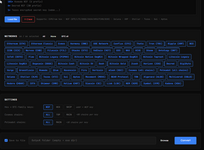 Priv to Address — converts private keys to addresses. Input formats: EVM hex, Raw hex 64, WIF (BTC/LTC/DOGE/DASH/KMD/FIRO/DCR), Solana base58, XRP hex, Stellar seed, Tezos ESK, Sui bech32, Aptos hex. Also accepts mnemonics directly. 57+ networks on output, three BTC-family output modes (WIF/HEX/skip), Cosmos and Polkadot filters.
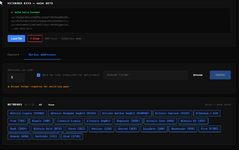 BIP32 — HD derivation along an arbitrary path. Accepts seed or xpub/xprv, derives child keys along any specified path.
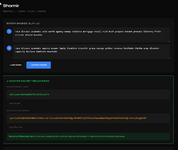 Shamir — splits a secret (seed phrase or key) into N shares using K-of-N scheme and reconstructs from K+ shares.
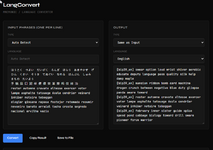 LangConvert — converts mnemonics between 18 BIP39/Monero/Electrum languages. Same entropy, different word representation.
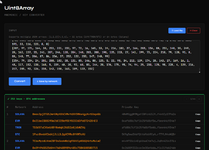 Uint8Array — conversion between byte arrays (JS-style), HEX, Base58, Base64. Useful when data is extracted from browser storage in raw form.
WALLETS
Scans a folder for wallet files, identifies the type of each, and brute-forces passwords. Output — seed phrase, private key, address — saved by network. 122 supported wallet types. Configurable search templates: prefix / suffix / exact / contains — for any folder structure.
Supports: MetaMask, Exodus, Trust Wallet, Phantom, Electrum, Bitcoin Core (wallet.dat), Ethereum Keystore (UTC JSON), Terra Station, KeePass, and dozens of others.
DATABASE
Importer — imports from external files: addresses, seeds, keys, structured exports. Auto-deduplication.
Exporter — export with filters by network, balance, date. Three output formats.
Search — full-text search across all records. By address, key fragment, seed phrase, network.
Stats — database statistics: record count, breakdown by network, session history, timeline.
Antipublic — verification against Antipublic breach databases.
DBSettings — built-in H2 or external PostgreSQL.
TEXT
A toolkit for processing large line-based files — dictionaries, password lists, address databases — as a stream, without loading the entire file into memory.
Sorter — alphabetical, by length, numeric, custom field
Search — keyword, regex, exact, inverted mode
Cleaner — BOM, CRLF→LF, null bytes, whitespace, empty lines
Deduplicator — case-sensitive/insensitive, by first N characters
Converter — encoding and format conversion line by line
Splitter — by line count, size, or delimiter
Merger — file merging: simple, interleaved, with on-the-fly deduplication
Filter — by length, substring, regex, character set, multiple AND/OR rules
Extractor — patterns from lines: addresses, keys, emails, URLs, phone numbers, custom regex
Replacer — string and regex replacement with capture groups, multiple rules in a single pass
Validator — rules by field (login/pass/url/domain): length, email format, presence of digits/special characters, regex. Ready-made presets.
Compare — unique lines in A, unique lines in B, common lines. Optimized for large files.
Antipublic text — file check against Antipublic without loading into the database
Analytics — line count, uniqueness, lengths, character frequency, entropy estimation
UTILITIES
Pass Mutex — password list manager with mutations. 17 mutation types: case (all variants including 2^n brute-force), leet (basic and all combinations), numbers (suffixes, middle insertion), special characters (30+ variants), years with separators, reverse, duplicate, keyboard walks, CamelCase, permutations, separators, padding. Accepts words or a ready-made list, supports login:pass format.
Cleaner — system folder cleanup: removal of malware files, scanning images and documents for embedded data, archive inspection (zip bombs), analysis of hidden and disguised files, script scanning, PE executable analysis.
Hashcat — dedicated Hashcat UI with full configuration: attack mode, hash mode, wordlist, masks, rules, workload, sessions, pre-configured masks for wallets.
Vanity — generates vanity addresses with a specified pattern. BTC (Legacy/SegWit/Native SegWit/Taproot), ETH/EVM, SOL, LTC, TRX, XRP, DOGE. Multithreaded.
Converter — quick format converter: HEX ↔ Base58 ↔ Base64, mnemonic ↔ HEX, WIF ↔ raw key, and more.
PROTECTION
Hardware binding: HWID + login/password. HWID rotates every 10 minutes.
ON THE WEBSITE
Available:
Roadmap — development plan with priorities and statuses.
Wiki — documentation for each module, input data formats, examples. Required reading, or available offline after purchase.
Changelog — full update history with descriptions.
File hashes — SHA256 for every build, so you can verify the integrity of your download.
Licenses — all license types used during development.
ABOUT
FastRunner is an officially registered commercial product. The company is incorporated in the Seychelles with full legal documentation. This is not another anonymous forum script — there is a legal entity behind the tool that is accountable for the product and continues to develop it. Because the product is officially registered, the scope of features is bounded from a legal standpoint — we cannot add things like Lolz API integration, Blockchain.com credential checking, GitHub scraping, auto-withdrawals, or similar functionality. Everything that can realistically be included in the software can be suggested via the form on the website or through support. If it's legally feasible, we will add it.
On privacy: the only user data collected is the HWID for license binding. No telemetry, no analytics requests, no transmission of processed data anywhere, no auto-updates or background downloads. All processing — file parsing, key derivation, password brute-forcing, mnemonic operations — happens exclusively on the user's machine. This is not a marketing claim; it is an architectural property: the software has no external endpoints other than license verification and changelog retrieval. Update checks are manual, triggered by a button.
FastRunner covers all of this in a single installation: parsing any files and formats, recovering damaged phrases, generating addresses across 71 networks, decrypting 122 wallet types, Hashcat integration, full-featured text tools for large database processing, a password mutation generator, vanity address generator, OCR via a local AI model, and a database with search and statistics. All with a proper GUI — no terminal, no Python dependency setup, no environment configuration.
At a comparable price point, nothing on the market comes close in terms of coverage — especially with these privacy guarantees and legal standing.
PRICING AND DISTRIBUTION
One-time payment (Lifetime) or subscription (monthly / 6-month / annual). Updates included for the duration of the license. Subscriptions do not auto-renew.
Source code — available under separate terms, on request.
Plans
Monthly $200
6 Months $700
Annual $1,500
Lifetime $2,000
Payment: crypto (ETH, BSC, SOL, TRX native).
Wire transfer for companies (B2B).
Universities — one free year upon submission of a form with supporting documents, provided the institution has a relevant information security department.
Escrow via forums is available: you pay the escrow → receive a coupon → download and install → escrow releases payment.
Technical support is provided for the duration of an active license.
Purchase records are stored on the seller's side. If you lose access to your account, contact support with proof of payment and your license will be restored. Your site password is stored only on your end in encrypted form — we recommend enabling 2FA via an authenticator app in settings. Individual buyers need only a login and password. Legal entities must work through B2B (company profile, agreement, invoices, email, contact details).
Website & purchase: pragmacodex.com
News & updates: on the website in the Changelog section or t.me/pragmacodex
Support: in the software under the Support tab, via the ticket system on the website, or t.me/pragma_support
Support responds within 2–48 hours on business days via the ticket system or Telegram.
Developer & rights holder: PragmaCodex
PARSING
MNEMONICS
Generation — runs a list of seed phrases through selected networks and derivation paths. Three parallelism modes: Standard / Threads (N threads) / Max (all cores). Saves addresses, private keys, and pairs to separate folders by network. Supports BIP39, Monero, Algorand, TON, Electrum. 71 networks, including Cosmoshub (40+ Cosmos chains in a single run) and Dothub (all of Polkadot/Substrate).
Full network list: Ada, Algo, Apt, Bch, Bnb, Bsv, Btc (Legacy/SegWit/Taproot), Btg, Conflux, Cosmoshub, Dash, Dcr, Dgb, Doge, Dothub, Egld, Eos, Etc, Eth, Evmos, Filecoin, Firo, Flow, Grs, Harmony, Hedera, Helium, Hive, Horizen, Icp, Icx, Iota, Iotex, Kadena, Kaspa, Kmd, Lisk, Ltc, Move, Nano, Near, Nem, Neo, Nervos, Ontology, Pi, Qtum, Rvn, Shimmer, Siacoin, Sol, Starknet, Steem, Stx, Sui, Symbol, Theta, Ton, Tron, Vet, Waves, Wax, Xdc, Xec, Xlm, Xrp, Xtz, Xvg, Zec, Zil.
Missing words — replace unknown words with ?, iterates through the entire BIP39 wordlist (2048^n combinations)
Unknown order — all words are known but the order is not — permutation brute-force
Typo — words with typos, search by Levenshtein distance, autocorrection
Partial words — you know the beginning of a word (e.g. aban?) — finds all matches from the wordlist
Result verification by address — specify a known address (BTC/ETH/SOL/TRX) for automatic validation.
WALLETS
Scans a folder for wallet files, identifies the type of each, and brute-forces passwords. Output — seed phrase, private key, address — saved by network. 122 supported wallet types. Configurable search templates: prefix / suffix / exact / contains — for any folder structure.
Supports: MetaMask, Exodus, Trust Wallet, Phantom, Electrum, Bitcoin Core (wallet.dat), Ethereum Keystore (UTC JSON), Terra Station, KeePass, and dozens of others.
DATABASE
Importer — imports from external files: addresses, seeds, keys, structured exports. Auto-deduplication.
Exporter — export with filters by network, balance, date. Three output formats.
Search — full-text search across all records. By address, key fragment, seed phrase, network.
Stats — database statistics: record count, breakdown by network, session history, timeline.
Antipublic — verification against Antipublic breach databases.
DBSettings — built-in H2 or external PostgreSQL.
TEXT
A toolkit for processing large line-based files — dictionaries, password lists, address databases — as a stream, without loading the entire file into memory.
Sorter — alphabetical, by length, numeric, custom field
Search — keyword, regex, exact, inverted mode
Cleaner — BOM, CRLF→LF, null bytes, whitespace, empty lines
Deduplicator — case-sensitive/insensitive, by first N characters
Converter — encoding and format conversion line by line
Splitter — by line count, size, or delimiter
Merger — file merging: simple, interleaved, with on-the-fly deduplication
Filter — by length, substring, regex, character set, multiple AND/OR rules
Extractor — patterns from lines: addresses, keys, emails, URLs, phone numbers, custom regex
Replacer — string and regex replacement with capture groups, multiple rules in a single pass
Validator — rules by field (login/pass/url/domain): length, email format, presence of digits/special characters, regex. Ready-made presets.
Compare — unique lines in A, unique lines in B, common lines. Optimized for large files.
Antipublic text — file check against Antipublic without loading into the database
Analytics — line count, uniqueness, lengths, character frequency, entropy estimation
UTILITIES
Pass Mutex — password list manager with mutations. 17 mutation types: case (all variants including 2^n brute-force), leet (basic and all combinations), numbers (suffixes, middle insertion), special characters (30+ variants), years with separators, reverse, duplicate, keyboard walks, CamelCase, permutations, separators, padding. Accepts words or a ready-made list, supports login:pass format.
Cleaner — system folder cleanup: removal of malware files, scanning images and documents for embedded data, archive inspection (zip bombs), analysis of hidden and disguised files, script scanning, PE executable analysis.
Hashcat — dedicated Hashcat UI with full configuration: attack mode, hash mode, wordlist, masks, rules, workload, sessions, pre-configured masks for wallets.
Vanity — generates vanity addresses with a specified pattern. BTC (Legacy/SegWit/Native SegWit/Taproot), ETH/EVM, SOL, LTC, TRX, XRP, DOGE. Multithreaded.
Converter — quick format converter: HEX ↔ Base58 ↔ Base64, mnemonic ↔ HEX, WIF ↔ raw key, and more.
PROTECTION
Hardware binding: HWID + login/password. HWID rotates every 10 minutes.
ON THE WEBSITE
Available:
Roadmap — development plan with priorities and statuses.
Wiki — documentation for each module, input data formats, examples. Required reading, or available offline after purchase.
Changelog — full update history with descriptions.
File hashes — SHA256 for every build, so you can verify the integrity of your download.
Licenses — all license types used during development.
ABOUT
FastRunner is an officially registered commercial product. The company is incorporated in the Seychelles with full legal documentation. This is not another anonymous forum script — there is a legal entity behind the tool that is accountable for the product and continues to develop it. Because the product is officially registered, the scope of features is bounded from a legal standpoint — we cannot add things like Lolz API integration, Blockchain.com credential checking, GitHub scraping, auto-withdrawals, or similar functionality. Everything that can realistically be included in the software can be suggested via the form on the website or through support. If it's legally feasible, we will add it.
On privacy: the only user data collected is the HWID for license binding. No telemetry, no analytics requests, no transmission of processed data anywhere, no auto-updates or background downloads. All processing — file parsing, key derivation, password brute-forcing, mnemonic operations — happens exclusively on the user's machine. This is not a marketing claim; it is an architectural property: the software has no external endpoints other than license verification and changelog retrieval. Update checks are manual, triggered by a button.
FastRunner covers all of this in a single installation: parsing any files and formats, recovering damaged phrases, generating addresses across 71 networks, decrypting 122 wallet types, Hashcat integration, full-featured text tools for large database processing, a password mutation generator, vanity address generator, OCR via a local AI model, and a database with search and statistics. All with a proper GUI — no terminal, no Python dependency setup, no environment configuration.
At a comparable price point, nothing on the market comes close in terms of coverage — especially with these privacy guarantees and legal standing.
PRICING AND DISTRIBUTION
One-time payment (Lifetime) or subscription (monthly / 6-month / annual). Updates included for the duration of the license. Subscriptions do not auto-renew.
Source code — available under separate terms, on request.
Plans
Monthly $200
6 Months $700
Annual $1,500
Lifetime $2,000
Payment: crypto (ETH, BSC, SOL, TRX native).
Wire transfer for companies (B2B).
Universities — one free year upon submission of a form with supporting documents, provided the institution has a relevant information security department.
Escrow via forums is available: you pay the escrow → receive a coupon → download and install → escrow releases payment.
Technical support is provided for the duration of an active license.
Purchase records are stored on the seller's side. If you lose access to your account, contact support with proof of payment and your license will be restored. Your site password is stored only on your end in encrypted form — we recommend enabling 2FA via an authenticator app in settings. Individual buyers need only a login and password. Legal entities must work through B2B (company profile, agreement, invoices, email, contact details).
Website & purchase: pragmacodex.com
News & updates: on the website in the Changelog section or t.me/pragmacodex
Support: in the software under the Support tab, via the ticket system on the website, or t.me/pragma_support
Support responds within 2–48 hours on business days via the ticket system or Telegram.
Developer & rights holder: PragmaCodex